

How To Repair Window Sill
Past Rob Robillard
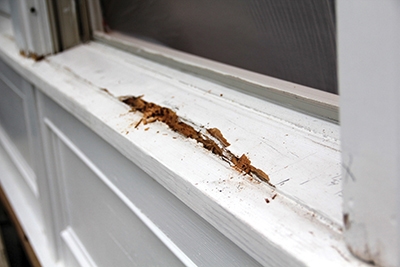
Wood windowsills take a chirapsia from Female parent Nature. Although sloped by pattern, a windowsill is nevertheless basically a horizontal shelf where water and snowfall tin can accrue. In one case water finds its way behind trim or below paint and caulk, the rot process begins. Ongoing exposure to this wet volition cause the windowsill to disuse and worsen over time. When caught early, often a small epoxy repair is all that is needed. Just when discovered late or left unchecked, the rot will penetrate deeper into the windowsill and even the wall framing, requiring much more all-encompassing and more expensive repair later.
Repair or Replace
The age-old debate of window replacement or window repair is a tough 1 to answer, only I'll explain how I try to guide my client's decision process.
I look at the repair versus the replacement question as a business approach. What makes the most sense; based on time, budget longevity, and of course hidden costs.
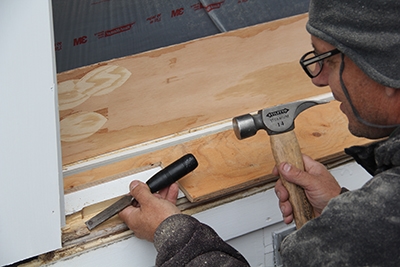
When dealing with quondam historic windows, often times repairing is the only selection. Many times these windows are protected by a metropolis or town'due south historic commune commission specifying that the window details remain unchanged. Oft times, replacement requires having a custom and costly window fabricated to match the style, look and dimensions of the existing old windows.
Other circumstances where repairing may be an option is on higher-end homes with large expensive units, bay windows or multiple mulled windows. Many times these windows will accept high-end trim, wainscoting or faux wall finishes that would add a multitude of extra costs if the window is replaced.
I often opt for window replacement when the cost of the window, any interior piece of work relating to the replacement and my replacement labor are equal to or less than the time I'd spend performing a quality repair. I often see this every bit a realistic option on more than mod homes when dealing with stand-solitary window units and elementary interior finishes and trim.
Replaceable Sill Nosing
Sometimes a windowsill has rot on the outer nosing only. Many newer windows really have removable nosing that can easily exist duplicated and replaced with Western Carmine Cedar, Mahogany or PVC. Others are designed as one piece and demand to be cutting away and patched.
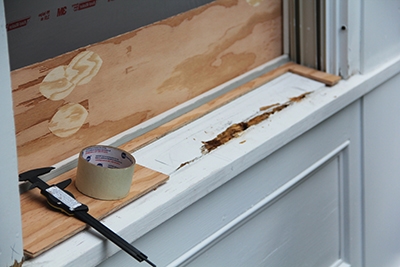
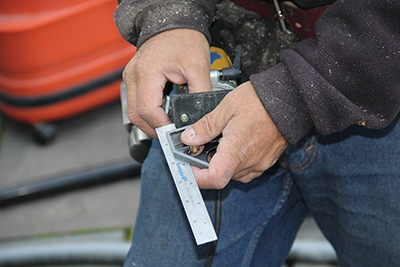
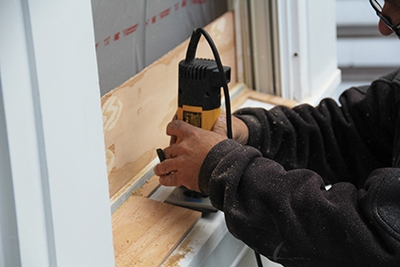
Installing a Dutchman Patch
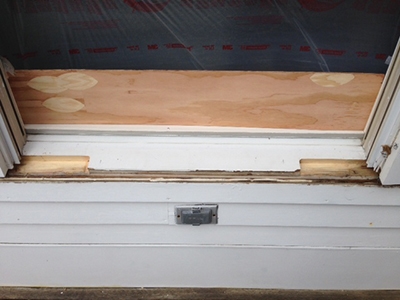
Dutchman patches are known primarily in carpentry, furniture-making and masonry. A Dutchman is a slice of wood or stone that is used to repair a larger slice, shaped then that it fills a void. In our instance nosotros cut the void and patched information technology with new woods—a Dutchman patch.
If windowsill rot is bars to only a small expanse, a simple patch and make full is all that is needed. For larger sections of damage, near or all the windowsill may need to exist removed and replaced.
When performing a Dutchman repair we similar to use Western carmine cedar or Mahogany for the patch. Both wood species have inherent insect- and rot-resistant qualities.
Employ a Router to Cut Out Rot
We use a compact router and guide to cutting our Dutchman patch because using anything else does non provide a straight enough line for a tight glue joint.
A router kicks up a lot of saw-dust, so sealing off the window is a must.
Dust Prevention
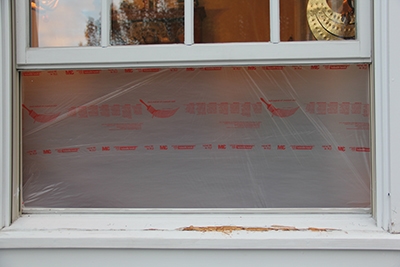
Prior to cutting out the rot you volition need to accept precautions to keep sawdust from entering the house. We apply a production called Tape & Mantle, a pre-taped masking film that unfolds to embrace and protect various surfaces while painting.
Nosotros then use painter'due south tape to completely seal off the sides of the plastic, on the inside of the window, and so raise the lower sash to provide admission to cut the sill with a router. This process ensures a grit-free firm interior.
Directly Edge to Guide the Router
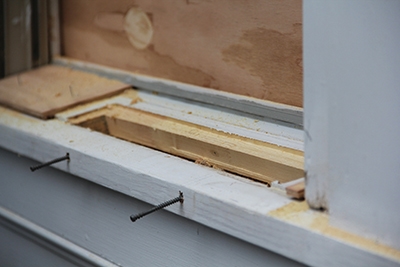
In order for whatever tool to cut straight you lot need to use a guide. Nosotros utilize quarter-inch plywood every bit our router guide, making the guide with a table saw and miter saw.
Once we decide where the rot ends and solid wood begins, we utilize that measurement plus the width of our router base to determine what size router guide we need. Small
four-penny finish nails hold the guide in identify, and these holes are later filled with epoxy.
Cutting the Dutchman Hole
We gear up our "directly cut" router bit to cut approximately three/viii inch deep all the way around. We then added modest i-inch strips to all template sides of the router guide and used the router to brand a "stepped back cut," cutting completely through the window sill. This takes several passes, each fourth dimension deepening the router cut.
We employ this "stepped method" to increase our gluing surface and to provide a shelf for the Dutchman patch to alphabetize into and rest on.
Smaller Rot Sections
When presented with smaller rot circumstances, not as deep, we only rout deep enough to eliminate the rot and cut into solid woods.
Set for the Patch
In one case the routing is completed we vacuum the entire expanse and inspect the framing sub-sill for impairment. If rotting, we may end upwardly removing the window after all. If not, the repair continues.
Nosotros utilize a chisel to square off the corners of the hole after routing. The Dutchman patch is cutting on a table and miter saw to ensure square corners.
Cutting the Dutchman Patch
Nosotros then take measurements and notes to brand our solid Dutchman patch on the table saw. The router rode along the sill, sloped 12 to 15 degrees, and then we try to match the angle on our patch.
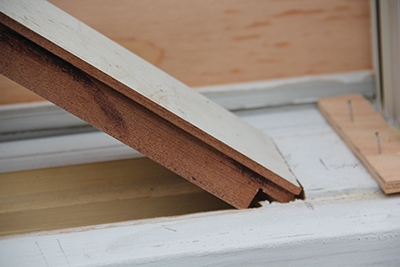
We duplicate this gradient with the intent of getting all the sides of the new patch to touch all the sides of the hole in the sill. This takes time to get right and ensure that we take a tight "dry fit" patch. Cutting the patch into shape with intersecting rip cuts to create the stepped key effect.

Gluing the Patch
Once nosotros have a solid dry fit with tight joints we mix up our epoxy.
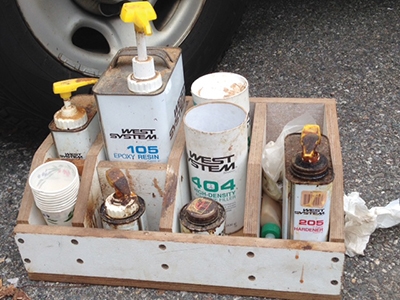
We use West Organisation epoxy, a versatile two-part, marine-grade epoxy that bonds and coats fiberglass, wood, metal, fabrics and other blended materials to provide superior strength and moisture resistance.
The epoxy was designed for boatbuilding and repair and works neat on windowsills, columns and other areas where gluing, filling and shaping are needed.
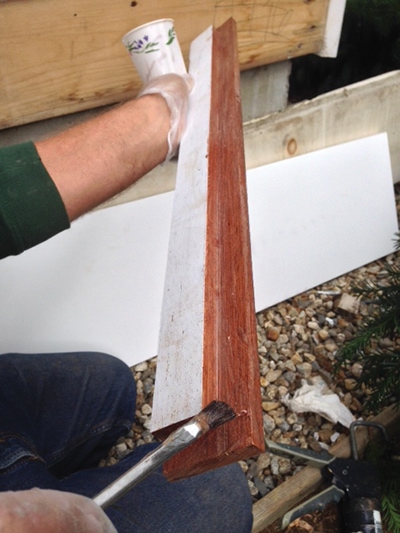
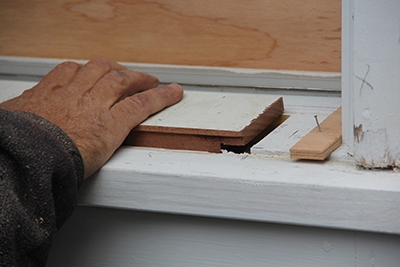
We use the epoxy in 2 ways, as glue and as filler. First nosotros brush on the epoxy to all wood surfaces and then tap in the slice. It swells a bit, and a gentle hammer-tap against a woods block is needed to get the Dutchman in place.
Once in position, clamp it or use a few well-placed terminate nails hold it until the epoxy dries—usually eight to 24 hours.
Fill Whatsoever Voids
Once the patch is installed, we mix upwards a batch of epoxy with structural filler to fill up and overlap the seams of the patch and any boom holes created during the repair.
Sand Patch
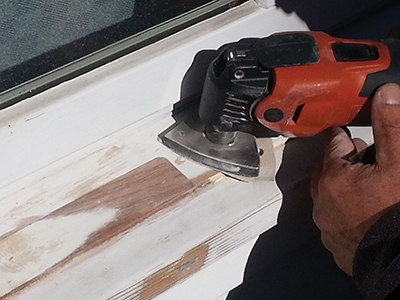
We wait 24 hours before sanding the patch and applying a quality oil primer to the entire windowsill. The painter will follow u.s. with additional primer and two-coats of paint.
Editor's note: Rob Robillard is a professional person remodeling contractor and blogger at www.aconcordcarpenter.com.
Source: https://extremehowto.com/patching-rotted-window-sills/
0 Response to "How To Repair Window Sill"
Post a Comment